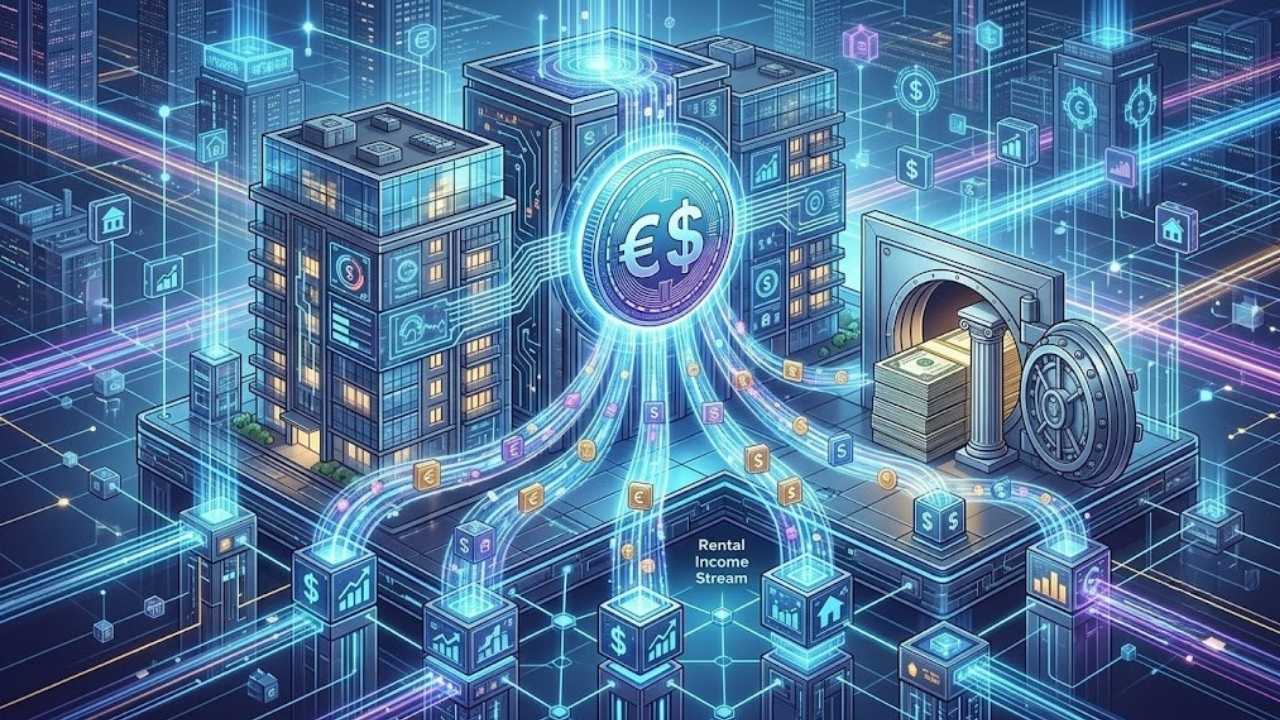
The digital asset market is experiencing structural pressure to diversify its financial reserves. The recent proposal to utilize commercial lease contracts seeks to turn real estate rent into a new frontier. This central bank working paper evaluates the technical viability of altering fiat backing foundations.
The dominant narrative assumes that government debt remains the only acceptable standard. However, potential rate cuts demand alternative assets. The real economy narrative consolidates this active search for continuous yield generation perfectly today.
Currently, stablecoins operate as highly efficient mechanisms for absorbing US sovereign debt, accumulating tens of billions in Treasury bills. Incorporating property rent would mitigate this state concentration risk. Various reports on digital asset tokenization document strong ongoing growth within the institutional sector.
Commercial leases offer highly predictable cash flows, demonstrating strong structural resilience against short-term monetary shocks. Some jurisdictions are advancing rapidly, while the UAE integrates tokenization strategically into their long-term macroeconomic development plans.
Comparatively, this phenomenon closely emulates the creation of mortgage-backed securities driven by Ginnie Mae during the seventies. That innovation transformed illiquid obligations into highly tradable instruments. Both systems face similar risks when structuring debt, although modern digitalization significantly accelerates market settlements.
The proposed model indicates that a smart contract will distribute monthly lease payments directly to token holders. This mechanism effectively eliminates traditional intermediaries, heavily reducing the operational costs associated with property administration.
Liquidity Challenges and Structural Risk
The contrarian view warns that physical rent is inherently illiquid and remains subject to severe commercial frictions. A strict regulatory framework for assets emphasizes that tangible real world properties cannot be sold instantaneously to satisfy massive digital capital withdrawal requests.
This severe duration mismatch represents the main structural weakness of the thesis. If the market experiences accelerated withdrawals, the administrator cannot sell buildings quickly. The lack of immediate liquidity would easily destroy any peg.
Furthermore, any interruption in the operational cash flow due to tenant vacancies would directly affect the projected yield. Fluctuations in physical occupancy would create unwanted volatility in a digital asset strictly designed to maintain a fixed and always constant nominal value.
The thesis would be completely invalidated if authorities classify these tokens as unregistered financial securities. Such legal categorization would prevent their use as money, limiting adoption strictly to highly qualified institutional investors.
Redefining Digital Collateral
Overcoming current obstacles will firmly require new hybrid collateralization models. Issuers will likely maintain a majority percentage in traditional liquid instruments alongside a smaller real estate fraction. This intelligent diversification will improve the overall profitability of the reserves backing the currency.
Developing special purpose vehicles allows for effectively isolating the underlying property risk. This legal separation guarantees that traditional creditors have no legal claims over the daily tokenized economic flows generated by the building.
Traditionally, corporate private money has always sought to expand its backing bases whenever public debt yields decline. Contemporary financial technology simply adapts the old structures of real estate investment trusts into modern formats designed for truly instantaneous global settlement and transfer.
Technical viability depends heavily on integrating state property registries with cryptographic networks. Without verifiable data delivered in real time, trust will remain anchored exclusively in traditional, slow, and highly centralized financial auditing processes.
The widespread adoption of these yield-generating instruments will radically change the relationship between tenants and global capital markets. Monthly lease payments will transform directly into units of liquidity, successfully democratizing open access to complex corporate finance structures for everyday digital users.
The macroeconomic consequences include a potentially significant reduction in general borrowing costs for property developers. By capturing decentralized global liquidity, builders manage to drastically reduce their long-standing overreliance on traditional commercial bank credit lines.
This constant flow of capital will depend on precise digital oracles to audit real physical transfers. Failures in transmitting accurate collection data would alter risk perception. The underlying infrastructure must overcome the high latency of slow legacy banking systems to function.
Managing the physical environment cannot be fully automated through computer algorithms. Structural maintenance and real estate taxes consume part of the gross income, requiring tokenized models to incorporate these variable operational forecasts accurately.
If platforms manage to structure debt tranches backed by commercial rents during the next fiscal cycle, the ecosystem will assimilate profits historically reserved for institutional private equity. These assets will progressively evolve from simple payment tools into complex fixed income vehicles.
If issuers succeed in standardizing lease contracts on public networks under clear regulatory supervision, we will witness a parallel monetary market fully backed by tangible productive assets emerging during the upcoming biennium.
The long-term impact of this definitive transition will redefine corporate investment portfolios globally. As stablecoins adopt guarantees based on commercial real estate, global financial markets will witness an unprecedented convergence between decentralized blockchain technology and traditional physical property ownership structures.
This phenomenon will structurally transform idle savings into highly productive global capital. Ordinary users will indirectly benefit from real estate appreciation, gaining exposure to traditionally exclusive markets simply by holding these rent-backed digital tokens.
This article is for informational purposes only and does not constitute financial advice.