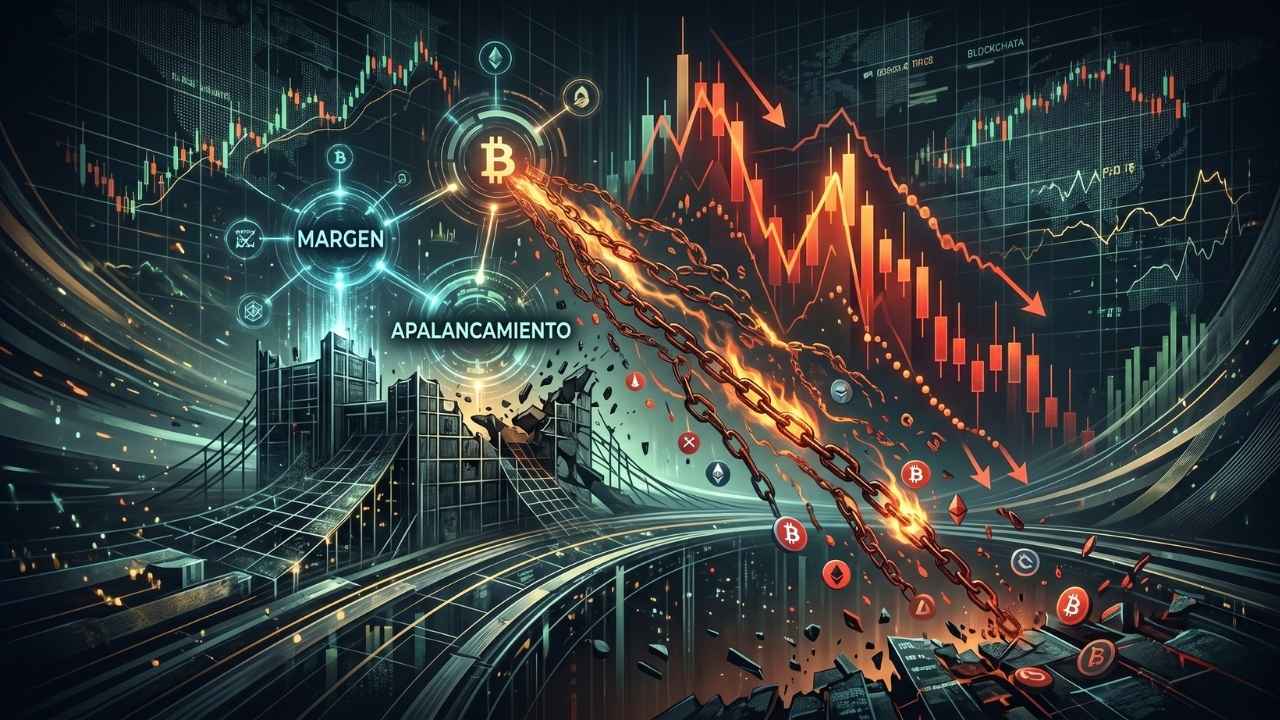
Systemic leverage in digital asset markets is not merely a tool for capital efficiency, but the primary driver of structural instability. We contend that the current crypto leverage risks reside in the fragility of collateral, which triggers a decoupling of price from fundamentals during volatility spikes. This thesis challenges the narrative that volatility is purely organic, pointing instead toward an automated liquidation infrastructure that acts as a loss multiplier.
The relevance of this analysis is sharpened in April 2026, after observing that open interest in perpetual contracts has reached levels that exceed the liquidity available in order books. Recent data from the Coinglass dashboard confirms that, in the last 24 hours, forced liquidations exceeded $800 million, proving that the market operates under algorithmic selling pressure that ignores the intrinsic value of assets.
The negative convexity of forced liquidity
Unlike traditional markets, where deleveraging is typically a process managed by brokers with time margins, the blockchain ecosystem executes position closures instantly and without discretion. This mechanism creates what we call “negative liquidity convexity”: the supply of assets increases exponentially while demand retracts due to panic. According to the IMF stability report, this interconnectivity between lending platforms and derivatives markets generates a risk of systemic contagion that cannot be mitigated through simple portfolio diversification.
The core of our differential argument focuses on the architecture of liquidation engines. These systems are designed to protect exchange solvency, not price stability. When a critical threshold is reached, engines launch massive market orders that sweep through existing bids, driving the price down and triggering the next layer of stop-losses.
This phenomenon of positive feedback in falling asset prices transforms a minor technical correction into a structural collapse. In this regard, the hegemony of perp DEXs has shifted part of this risk to decentralized protocols, where transparency is higher, but execution speed is equally relentless.
Historical comparison and collateral fragmentation
Analyzing the May 2021 collapse against 2026 metrics reveals a qualitative shift in collateral composition. While in previous cycles collateral was mostly BTC or fiat-backed stablecoins, today we see a proliferation of liquid staking tokens (LST) and re-staked assets. A BIS study warns that using volatile assets as collateral to obtain further leverage creates a highly unstable debt tower. This collateral fragmentation means that a drop in a secondary protocol can force the sale of primary assets, breaking historical correlations.
The counterpoint must be acknowledged: market advocates such as market-making firms maintain that leverage is essential for market depth. They argue that, without it, bid-ask spreads would be unaffordable for institutional investors. While it is true that leverage provides liquidity during calm periods, experience shows that this liquidity is illusory and vanishes precisely when the system is stressed. The capital efficiency argument is valid only if liquidation mechanisms do not act as a destructive force on the underlying asset itself.
Towards irreversible structural volatility?
The validity of this thesis will be confirmed or invalidated based on the behavior of the funding rate. If we observe that funding rates remain negative for more than seven consecutive days following a massive liquidation event, we will confirm that structural damage has expelled organic liquidity. Conversely, a rapid recovery would indicate that the market has developed an absorption capacity superior to what is projected.
If the volume of liquidations relative to open interest stays above 15% during high volatility episodes, market instability will be a permanent feature of the current institutional cycle. The reliance on collateralized credit to maintain long positions suggests that true price resistance is not found in technical support, but in the collateral margin of whales.
This article is for informational purposes and does not constitute financial advice.