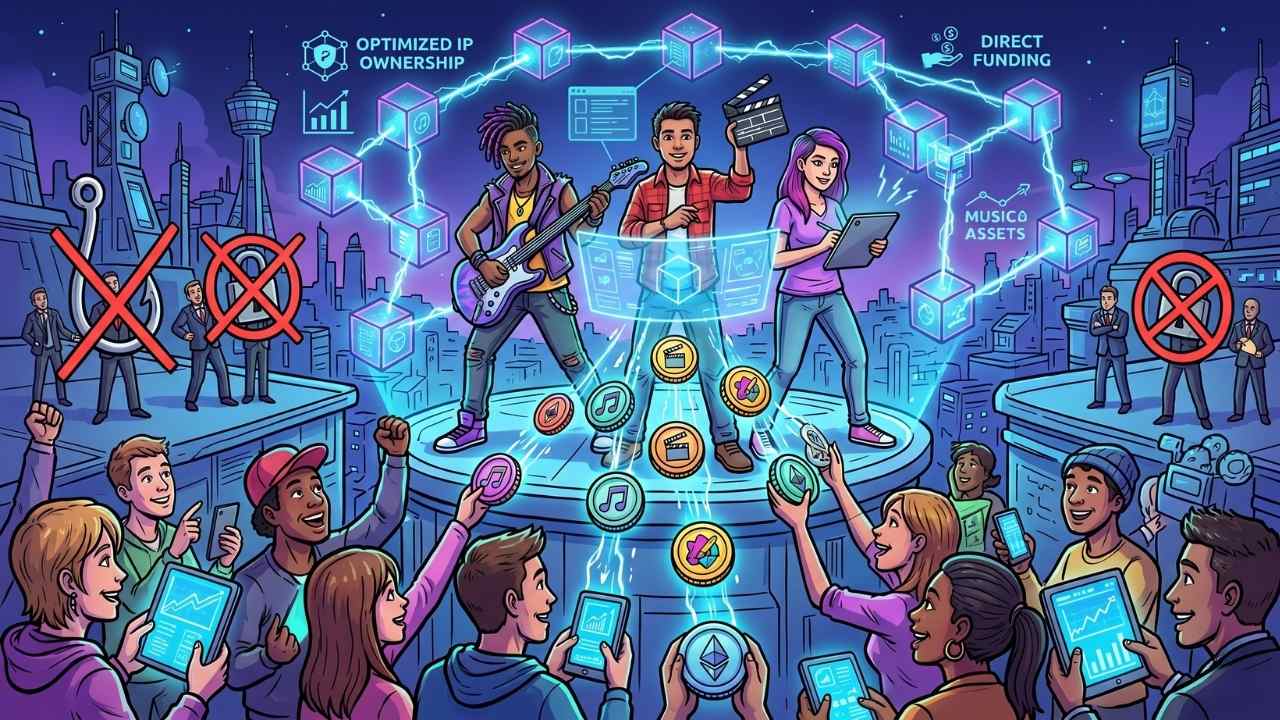
Independent creators have traditionally faced systemic barriers to accessing capital without ceding full control over their work. The emergence of tokenization protocols now allows for the fragmentation of copyrights, transforming intellectual property into liquid and tradable assets through decentralized networks.
This paradigm shift decentralizes access to capital, allowing the community to directly fund creative development. According to financial institution projections, the market for tokenized assets could reach significant figures, irreversibly redefining the creator economy within the next five years.
The current technological infrastructure facilitates the conversion of any digital or physical asset into a token within a blockchain. This process provides artists with financial tools previously reserved for large corporations, allowing them to monetize future income streams immediately and transparently.
To validate this trend, the BCG report on asset tokenization estimates that the market opportunity for tokenized illiquid assets will be massive. This emerging liquidity is fundamental for creators who need operating capital without resorting to traditional bank loans.
The growth of this sector is not a coincidence but a response to the saturation of traditional advertising models. The creative industry seeks alternatives where the relationship between the creator and their audience does not depend exclusively on centralized platform algorithms that retain excessive margins.
Recent data from the Goldman Sachs study on the creator economy indicates that this ecosystem could approach half a trillion dollars by 2027. This expansion requires more agile financing mechanisms than current ones, where blockchain is positioned as the efficiency standard.
The adoption of these tools not only benefits individuals but also integrates creators into a global financial market. By tokenizing their work, authors can establish automatic royalty rules through smart contracts, ensuring fair payments in every resale of their digital assets.
However, integrating these assets into institutional environments poses significant technical and strategic challenges. It is relevant to analyze how public blockchains in institutional markets are integrated to understand the necessary balance between open liquidity and control mechanisms.
Historically, content financing depended on record or publishing contracts that penalized young talent with unfavorable terms. In the Web 2.0 era, platforms offered distribution but maintained control over data and much of the revenue generated by followers.
The transition to Web3-based models allows creators to issue their own governance or utility tokens. This not only provides seed funding but also aligns follower incentives with the long-term success of the creative project, fostering a more engaged community.
International organizations have begun to observe how these technologies impact rights management. The WIPO document on blockchain and intellectual property analyzes the potential of these decentralized registries to improve traceability and protection of works globally.
From a technical perspective, issuing assets through tokenization platforms reduces entry costs. This allows small-scale projects to access global investors, eliminating geographic borders that limited the growth of artists in regions with less developed or restrictive financial systems.
Transparency in fund management is another fundamental pillar provided by distributed ledger technology. Every transaction is auditable, generating trust among investors and patrons, who can verify in real-time how the resources provided for the project are being used.
Despite the benefits, there is a critical view warning about the inherent volatility of crypto assets. Critics argue that linking art to the value of a token can distract the creator from their original purpose, subjecting them to the fluctuations of a highly speculative and poorly regulated market.
This position is valid, as a price drop in the secondary market could affect the perception of the artist’s value. Furthermore, technical complexity remains a barrier for many creators who do not have deep knowledge of digital wallets or blockchain network security.
The lack of a uniform global regulatory framework creates legal uncertainty for those issuing tokenized assets. If a token is classified as a security in one jurisdiction but not another, the creator could face serious legal issues when trying to attract international investors.
To mitigate these risks, it is essential to understand the architecture of the networks where these assets are issued. The choice between private or public solutions will define the level of open liquidity versus control the issuer can exercise over their own financial instruments.
A point that would invalidate the blockchain financing thesis would be excessively restrictive regulation prohibiting retail token issuance. If regulators consider any creator token to be a security, compliance costs would outweigh the benefits of decentralization and direct funding.
Comparatively, the adoption of new financial technologies has always faced initial resistance. Just as traditional crowdfunding took years to be accepted and regulated, the tokenization of intellectual assets is going through its technical and legal maturation phase, seeking a balance.
The Citi GPS report on decentralized finance highlights that the tokenization of real-world assets is one of the applications with the greatest potential for mass adoption. Independent creators are, by nature, early adopters of solutions that grant them autonomy.
The ability to fractionate ownership allows even investors with little capital to participate in the success of their favorite artists. This democratizes investment in art and culture, allowing the financial support base to be much broader and more diverse than in the traditional system.
It is essential for creators to consider the long-term sustainability of these models. It is not just about obtaining quick financing, but about building a financial infrastructure that supports their entire career, allowing them to manage licenses and collaborations automatically.
The current market is demonstrating that there is a real demand for assets representing tangible creative value. The cryptographic security of assets ensures that intellectual property cannot be duplicated or stolen without leaving a clear trail on the blockchain, protecting long-term value.
If the adoption rate of digital wallets among content consumers increases by 20% annually and regulatory frameworks in key markets like the European Union offer clarity on digital assets, tokenization is likely to become the primary financing route for independent creators.
This article is for informational purposes and does not constitute financial advice. / Este artículo tiene fines informativos y no constituye asesoramiento financiero.