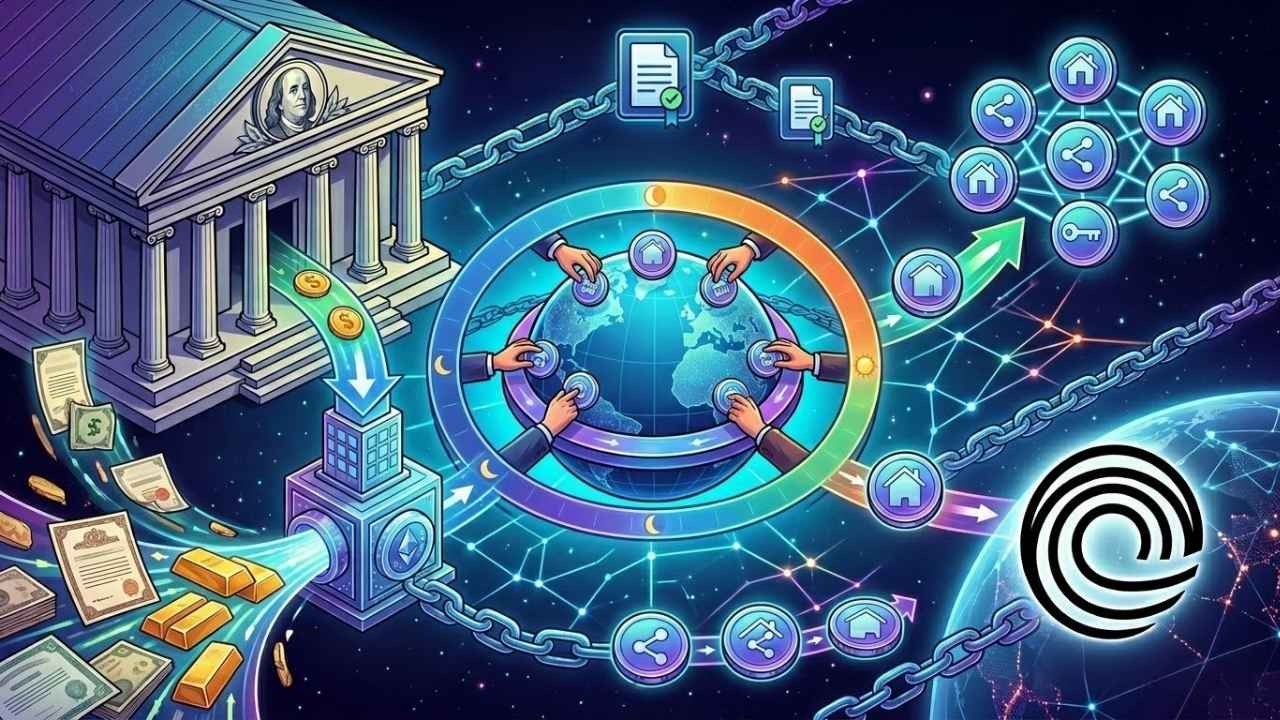
Ondo Finance partners with Franklin Templeton to tokenize traditional investment products on March 25, 2026, according to the platform’s official report. This alliance boosts the tokenization of real-world assets Franklin Templeton, integrating stocks and ETFs into digital wallets to democratize access to the U.S. securities market with immediate settlement.
The initiative is channeled through Ondo Global Markets, an ecosystem that allows for acquiring stock market securities without the need for traditional accounts. By removing conventional entry barriers, global investors can gain direct exposure to regulated assets. The management of assets through decentralized digital protocols represents the most significant structural change of this current financial decade.
Transformation of stock market liquidity through high-speed financial rails
Franklin Templeton, with 1.7 trillion dollars in assets under management, will supply the underlying financial products for this agreement. This move confirms that Wall Street financial institutions are actively adopting public network infrastructure for their daily operations. The use of blockchain technology allows asset ownership to be verifiable and transparent for all current participants in the market.
The platform already records more than 12,000 million dollars in transactional volume since its launch late last year. This growth evidences a massive migration of capital toward settlement systems that operate twenty-four hours a day. Unlike closed markets, this integration allows for constant and uninterrupted capital mobility for both retail and institutional investors worldwide.
Historically, accessing foreign markets required currency conversions and slow, expensive administrative processes for the individual investor. With the tokenization of real-world assets Franklin Templeton, these processes are drastically simplified through the use of smart contracts. Official reports detail how demand comes from users seeking efficiency without the friction of heavy banking intermediaries.
Does this alliance represent the end of traditional stock market hours on Wall Street?
The convergence between institutional capital and digital assets faces complex regulatory challenges in various jurisdictions across the entire world. Regulators are still debating how to treat securities that transfer freely between borders via non-custodial digital wallets. Nonetheless, SEC filings show a conscious effort to integrate these technological innovations within the current legal framework existing today.
Compared to the 2022 cycle, the industry has moved from pure speculation to real and tangible utility. The security of funds and on-chain transparency are now the fundamental pillars of any serious financial project. The success of this transition will depend on the ability of regulators to adapt to the speed of computer code.
Franklin Templeton also plans to launch educational programs to attract native investors from the digital finance ecosystem. This strategy seeks to close the knowledge gap between traditional finance and long-term portfolio strategies. Massive institutional adoption requires a solid base of users informed about the risks and benefits of these protocols.
The market is closely watching if other financial giants will follow this path of aggressive, transparent, and highly technified disintermediation. The competitive advantage of banks as gatekeepers could erode quickly if users prefer the autonomy of digital rails.