
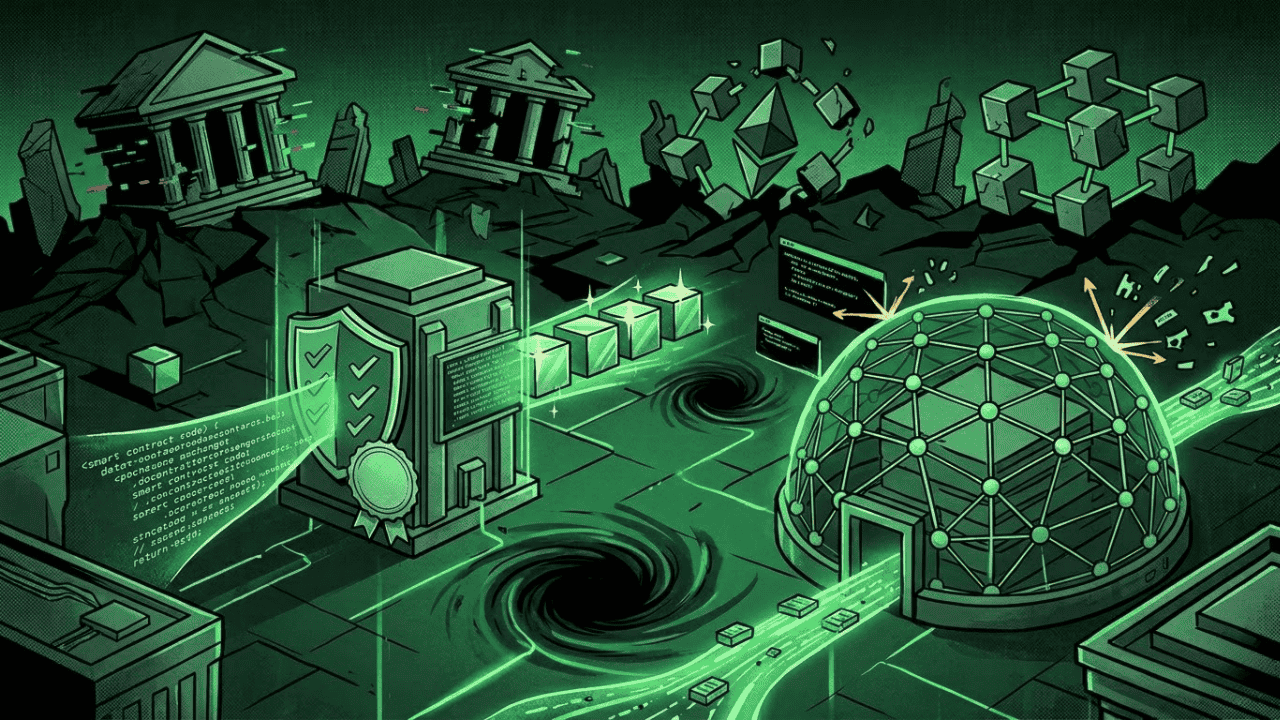
Security in the decentralized finance ecosystem has ceased to be an optional feature to become the pillar of institutional survival. In 2026, determining which are the most secure DEXs requires an analysis that transcends the simple superficial audit of the code. The market has learned that decentralization does not guarantee immunity from sophisticated attacks.
This narrative questions the consensus that any non-custodial protocol is inherently superior in terms of user protection and funds safety. Reality suggests that the complexity of new smart contracts introduces unprecedented risk vectors for all participants. Therefore, identifying the DEXs más seguros involves evaluating governance, liquidity, and historical response to critical and unexpected incidents.
The Evolution of Security: From “Move Fast” to “Audit First”
Under this prism, the industry has transitioned from the chaotic experimentation of 2020 towards a preventive and rigorous security model. The most secure DEXs today are those that implement continuous audits and extremely aggressive bug bounty programs. The sector’s maturity is reflected in a lower frequency of critical exploits in top-tier protocols.
In other words, trust is now built on the basis of total transparency in development processes and community oversight. While it is true that zero risk does not exist, leading protocols have adopted bank-grade protection standards. The search for the most secure DEXs begins by verifying the depth of their smart contract security audits performed by prestigious international firms.
Far from being a coincidence, this professionalization responds to pressure from global regulators demanding greater protection for retail investors. Consequently, projects that aspire to be the most secure DEXs allocate a large part of their treasury to defense infrastructures. Operational resilience is now the main competitive differentiator in DeFi compared to traditional centralized trading options.
Uniswap v4 and the Challenge of Secure Customization
The Uniswap v4 architecture has redefined the concept of efficiency, but it has also introduced the hooks attack surface. To remain among the most secure DEXs, the protocol required more than eleven exhaustive audits before its massive mainnet deployment. This structure allows custom logic but demands extreme vigilance over the external contracts interacting with the pool.
At the same time, the community has developed real-time monitoring tools to detect anomalous behavior in trading patterns. For a user to consider these protocols as the DEXs más seguros, they must understand the shared responsibility of the model. Technical flexibility must not compromise the integrity of funds deposited in the liquidity contracts at any time.
While it is true that Uniswap maintains a dominant position, its security depends on the quality of third-party extensions. The market watches with caution how these hooks can introduce reentrancy vulnerabilities if not managed correctly. The reputation of being the most secure DEXs is tested with every new update to the core protocol.
Resilience in Curve Finance: Learning from Past Crises
Curve Finance represents a case study on the recovery and strengthening of critical infrastructure in the DeFi sector. After facing significant technical challenges in previous cycles, the protocol has implemented improvements in its internal mathematical logic. Its focus on assets with stable parity positions it as one of the most secure DEXs for high volumes.
In other words, specializing in stableswap reduces exposure to the extreme volatility that usually precedes targeted network attacks. Curve’s governance has prioritized security over the aggressive expansion of features that have not been sufficiently tested. This strategy has allowed it to regain the confidence of institutional liquidity providers after the 2025 events.
Furthermore, the implementation of a dedicated security hub and tiered bounties has strengthened its ecosystem in an organic way. When analyzing which are the most secure DEXs, the ability to respond to incidents is a determining factor for capital. Curve’s technical maturity proves that experience is the best auditor in the world of open and decentralized finance.
The Rise of Perp DEXs and Leverage Security
The emergence of protocols such as dYdX and GMX has transformed the perception of risk in decentralized derivatives markets. The hegemony of Perp DEXs suggests a structural shift towards total transparency of open trading positions. These systems must be the most secure DEXs to avoid unfair liquidations caused by oracle manipulation.
Under this prism, the integration of decentralized oracle networks and aggregated prices has mitigated the risks of external manipulation. Security here lies not only in the code but in the robustness of the data sources feeding the contracts. Choosing the most secure DEXs in the perpetuals market requires evaluating the history of latency and pricing accuracy.
At the same time, the migration of protocols to sovereign chains, such as dYdX Chain, seeks to eliminate dependencies. This technical autonomy allows for finer control over security parameters and the overall performance of the network. The search for the most secure DEXs now moves towards superior infrastructure for perpetuals that can reliably support high-frequency trading.
The Role of Regulation and Decentralized Insurance
Regulatory vigilance has forced protocols to adopt compliance measures that were previously ignored by most of the industry. The creation of the SEC Crypto Task Force has placed the focus on protecting user digital assets and markets. The most secure DEXs in 2026 often actively collaborate with self-regulatory frameworks and transparency standards.
Likewise, the emergence of robust decentralized insurance offers an additional layer of protection against smart contract failures and bugs. Users who prioritize the most secure DEXs usually take out specific coverage for their largest positions in the market. This symbiosis between protocol and insurance defines the new standard for institutional security in the DeFi world.
That said, the maximum security thesis could be invalidated if oracle centralization persists in some specific sub-sectors. If a large-scale attack compromised the main data sources, even the most audited protocols would eventually fail. Therefore, ensuring the most secure DEXs requires technical redundancy at all levels of the network’s operational structure.
If code audits are integrated with automated insurance systems over the coming quarters, confidence in DeFi will reach historic levels. Under this scenario, the distinction between the DEXs and traditional banking will become increasingly blurred for the modern investor.

