
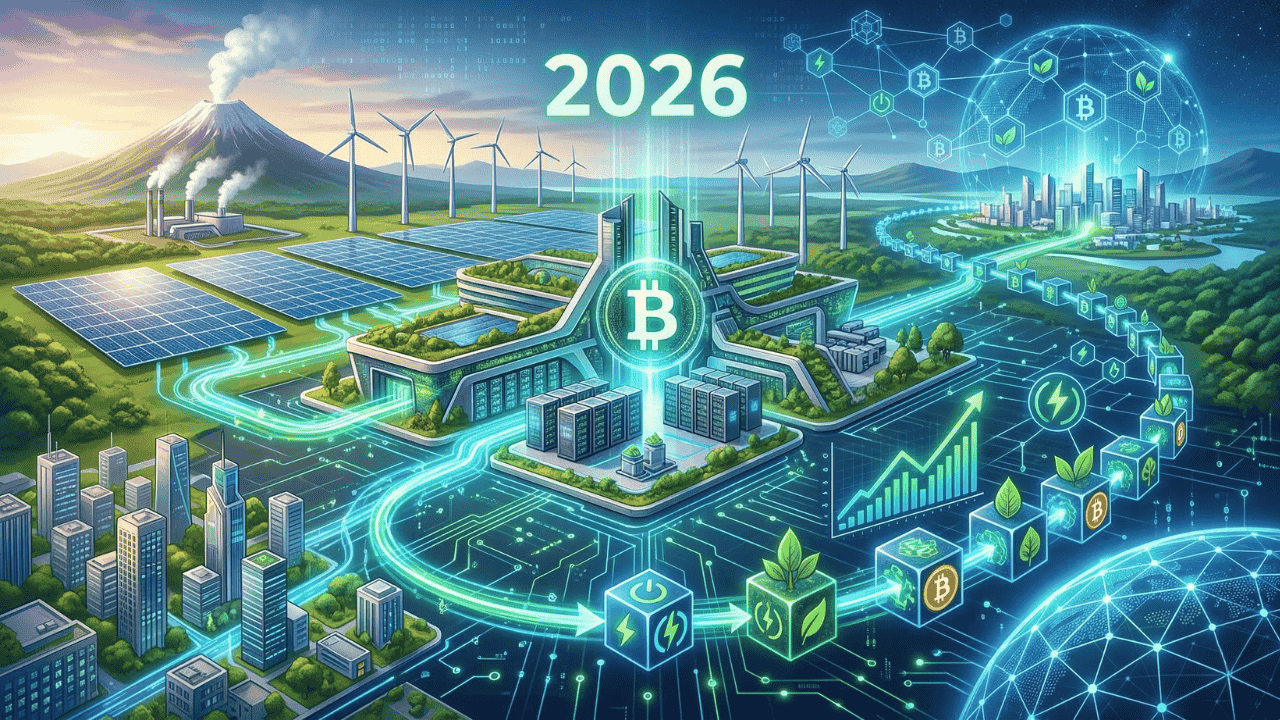
The dominant narrative labeling Bitcoin as an ecological disaster has collapsed under the empirical evidence of 2026. The underlying reality suggests that mining is not just an energy consumer, but an essential dynamic load manager for modern power grids’ stability.
Everything points to the relentless pursuit of energy efficiency pushing the industry toward a symbiosis with renewable sources. Far from being a coincidence, this transition results from a unique economic incentive structure that rewards using wasted energy surpluses.
Debunking the Energy Parasite Myth Through Data
The idea that Bitcoin competes with households for electricity is a technical fallacy that ignores mining geography. According to the Cambridge Bitcoin Electricity Consumption Index (CCAF), over 56% of the network is now powered by entirely sustainable energy sources.
Consequently, the network’s carbon footprint has dropped significantly despite the constant increase in hash rate. The underlying reality suggests that miners seek zero marginal cost energy, predominantly found in isolated areas of renewable overproduction.
While it is true that absolute consumption is high, comparing it to entire countries is a misleading metric. In other words, Bitcoin mining uses less energy than Christmas lights or the traditional banking system, but with an incomparable global security purpose.
At the same time, hardware efficiency has improved by 30% over the last two years following the last halving. Miners who do not operate with cheap, sustainable energy are forced out of the market, ensuring a constant purge of inefficiency throughout the industrial sector.
The Catalyst for Renewables and Grid Stability
Mining acts as a buyer of last resort that enables the viability of new solar and wind projects. A recent study in MDPI proves that Bitcoin accelerates renewable penetration in power grids by monetizing surplus energy that would otherwise be wasted.
From this perspective, wind farms that previously had to shut down due to lack of demand now maintain operations. The underlying reality suggests that miners provide a steady stream of income that reduces the payback period for clean energy infrastructure.
In other words, Bitcoin solves the intermittency problem inherent in natural energy sources. Consequently, grid operators in regions like Texas use mining as an active demand response mechanism during critical demand peaks in the system.
As confirmed by the ERCOT report (2026), the miners’ ability to disconnect instantaneously saves lives during winter storms. This flexibility turns data centers into high-fidelity virtual batteries that stabilize the frequency of the entire national power grid.
Methane Mitigation: Turning Waste into Digital Value
One of mining’s most underrated contributions is its ability to reduce potent gas emissions. Flare gas technology allows for capturing methane that would otherwise be released directly into the atmosphere at oil fields worldwide.
According to research published by Batcoinz, this practice could eliminate up to 5.32% of global emissions by 2045. It is the only industry capable of performing this cleanup in an economically viable way without external government subsidies.
In other words, Bitcoin is cleaning the air while securing the world’s most robust financial system. The underlying reality suggests that proof of work is the most efficient decarbonization tool currently available for industrial sectors that are traditionally difficult to electrify.
Under this lens, Galaxy Digital reports highlight that the positive impact of methane mitigation far outweighs CO2 emissions. Green mining is not just a PR narrative, but a verifiable technical reality on-chain and in environmental records.
From Chinese Coal to Global Sustainability: A Historic Leap
Historical context is essential to understanding why public perception is changing so radically in 2026. In 2017 and 2020, much of the mining was concentrated in China, relying heavily on coal during low hydro seasons.
However, the 2021 Chinese ban sparked the “Great Mining Exodus” toward jurisdictions with more transparent power grids. This historic event forced a geographic and energy decentralization that placed sustainability at the heart of all corporate mining operations.
Subsequently, the arrival of exchange-traded funds has fueled the end of the corporate taboo. As it becomes an inevitable reserve asset, institutions demand extremely rigorous ESG standards from mining companies listed on the stock exchange.
Today, Bitcoin competes not just as money, but as a top-tier global energy infrastructure solution. In a scenario of trade tensions, its role as an alternative settlement system reinforces the need for its production to be sovereign, clean, and highly efficient.
Concentration Risks and the Thesis Invalidation Scenario
From a perspective of intellectual honesty, critics argue that green mining could be a facade. They analyze that total consumption continues to grow and that, in certain regions, it could delay the retirement of obsolete fossil fuel plants due to profitability.
While isolated cases exist, the global macroeconomic trend systematically points to the contrary. The green mining thesis would be invalidated if the cost of renewables increased drastically above the cost of coal or natural gas.
In other words, Bitcoin’s environmental success depends on clean energy remaining the cheapest option. Simultaneously, if regulators impose punitive taxes on electricity consumption without distinguishing the source, the industry could be forced into inefficient clandestine operations.
The reality suggests that transparency is the sector’s best defense against unfounded political attacks. Real-time monitoring of the carbon intensity of the grid allows investors to validate the sustainability of every satoshi mined today.
The Verdict of Efficiency: Toward a Carbon-Negative Network
Bitcoin mining has proven to be the most powerful energy innovation engine of the last decade. If the methane capture trend continues to expand, the protocol could become the first global-scale industry to reach a carbon-negative state.
If network incentives keep renewable profitability above 60% of the total energy mix, Bitcoin will be unquestionable as a green asset. Conversely, if the industry neglects transparency, the energy parasite narrative could resurface with renewed political force.
Ultimately, Bitcoin does not consume energy; it transforms it into financial freedom and stability for the electrical system. The future of money is green not by decree, but by the implacable logic of the market that punishes waste and rewards total operational efficiency.

