
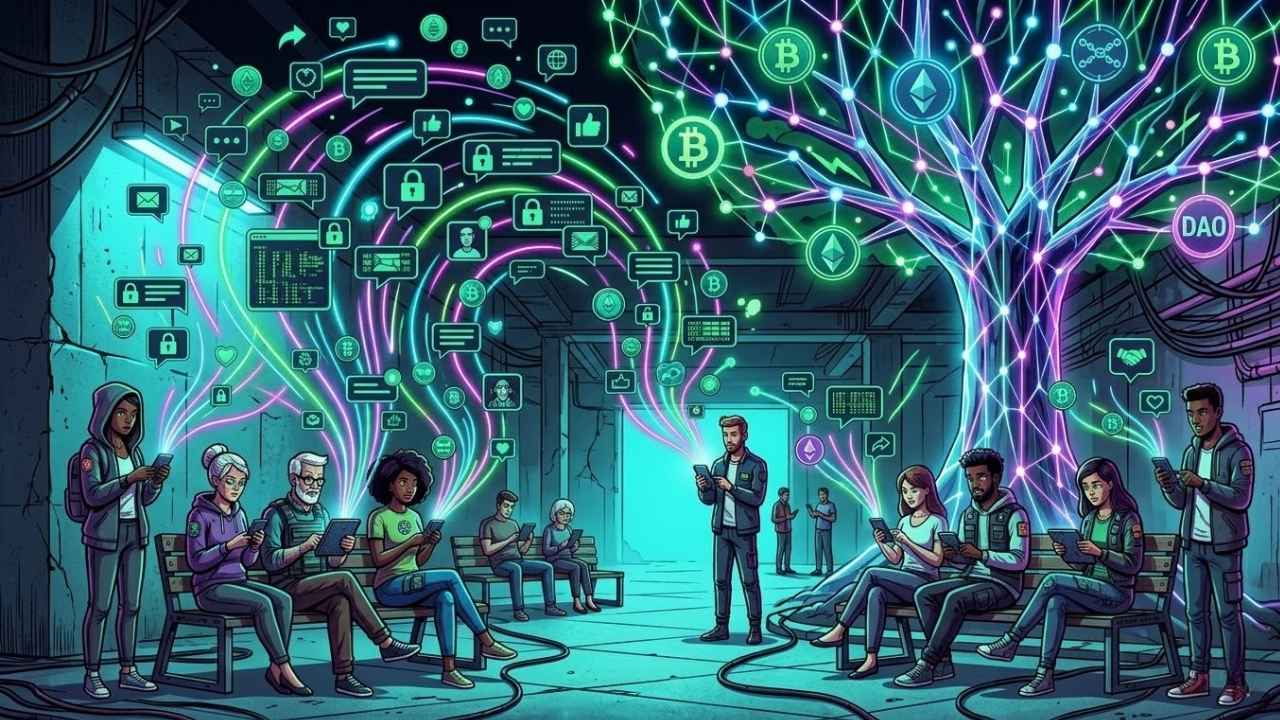
Global disenchantment with algorithmic control and centralized censorship has driven interest in decentralized social networks this year. These digital platforms promise to return absolute content control to their original and legitimate creators. However, the technical barrier remains the primary obstacle to achieving sustained and massive adoption in 2026.
Reality suggests that users seek freedom, but not at the expense of functional design convenience. Decentralized social networks face the dilemma of replicating the network effect of giants like Instagram or X. Without a critical user base, digital sovereignty risks becoming an unproductive technological isolation for most people.
Technical Innovations: Beyond Simple Censorship Resistance
Unlike traditional models, decentralized social networks introduce the concept of social graph ownership. This means that connections between users do not belong to the company; they are recorded on a blockchain. Therefore, a user can migrate their full profile between different applications without losing their followers or history.
Simultaneously, the integration of smart contracts allows for direct monetization models without banking or corporate intermediaries. The ability to transform posts into unique digital assets through socialfi redefines the modern creator economy. These tools facilitate revenue flowing directly to those who generate real value within the digital ecosystem.
In other words, the architecture of these networks eliminates the role of the “owner” of the walled garden. Decentralized social networks operate under open protocols that encourage interoperability between various independent user interfaces. This shift seeks to shatter the data monopolies that have defined the last decade of the internet.
The Market in 2026: Figures of a Fragmented Adoption
According to the 2026 market report, the sector for these platforms will reach 3.678 billion dollars this year. This growth represents a compound annual rate of over 22%, driven by the demand for privacy. However, most capital remains concentrated in specific niches of highly specialized cryptographic users.
In terms of users, the Farcaster protocol maintains a base of 60,000 daily active users according to January data. While the figure is modest compared to X, the interaction quality exceeds Web2 standards. User retention in decentralized social networks strictly depends on the real utility of the community governance tools offered.
On the other hand, Bluesky has managed to exceed 27 million users by using an open federation model. This success suggests that the public prefers gradual decentralization rather than absolute technical complexity from the start. Mainstream adoption appears to lean toward solutions that hide code complexity behind familiar user interfaces.
Historical Context: From Walled Gardens to Web3
To understand this evolution, we must go back to the era of open protocols like email (SMTP). Before the rise of Facebook, the web operated on standards that no one individual fully owned technically. The emergence of decentralized social networks is an attempt to reclaim that original open architecture of the internet.
Comparatively, the decentralized finance cycle in 2020 showed how liquidity can quickly leave traditional banks. That historical event validated the viability of the most secure decentralized exchanges as an alternative to classic financial institutions. Today, decentralized social networks seek to replicate that same power shift in the communication sphere.
This historical prism allows us to identify that data infrastructure always tends toward long-term decentralization. According to Reuters Institute studies on creators, influencers prefer platforms where they own their audience. The transition toward decentralized social networks is the logical response to the arbitrariness of closed recommendation algorithms.
The Counterpoint: Is Decentralization a Hurdle for the User?
Detractors argue that most people do not want to manage their own private security keys. While sovereignty is attractive, losing a password on these networks implies the total loss of the profile. This technical risk factor could limit the massive growth of decentralized social networks among the general population.
Under this scenario, if platforms do not achieve an invisible user experience, they will remain relegated to activist groups. The World Economic Forum on digital sovereignty warns that geopolitical competition also influences technological adoption. Excessive protocol fragmentation could weaken resistance against Silicon Valley’s large technological corporations.
Far from being a coincidence, traditional networks are already implementing portability features to curb this massive migration. If X or Instagram adopt open identity standards, the incentive to use decentralized social networks could diminish. The victory of decentralization will depend on its ability to offer financial incentives that Big Tech cannot match.
The Future of On-Chain Digital Identity
The integration of sovereign digital identity is the pillar that supports this new communication ecosystem. By using global standards, a user can verify their reputation across multiple services without revealing sensitive personal data. Decentralized social networks act as the ideal testing ground for these advanced privacy technologies in 2026.
Reality suggests that surveillance-based advertising is coming to an end due to regulatory pressures. In this sense, the National Law Review study highlights that privacy laws favor distributed models. Companies must adapt their marketing strategies to an environment where the user owns their attention.
Therefore, the success of decentralized social networks will not come from copying the functions of current networks. Their differential value lies in creating local economies and voting systems that empower communities. The capacity for self-organization without intermediaries is the most disruptive innovation these platforms offer to the modern world.
Conclusion on the Viability of the Decentralized Model
Everything points to the convergence of identity, finance, and communication as the final destination of the current web. Decentralized social networks will cease to be a marginal alternative to become the base infrastructure for interaction. The technological maturity of the sector will allow the average user to participate without deep technical knowledge beforehand.
If the volume of socialfi transactions exceeds critical levels during the next eighteen months, the paradigm will shift. The sustainability of decentralized social networks will be linked to the creation of mobile applications with near-zero latency. Only then can we affirm that digital freedom of expression is a technical reality and not just an aspiration.

