
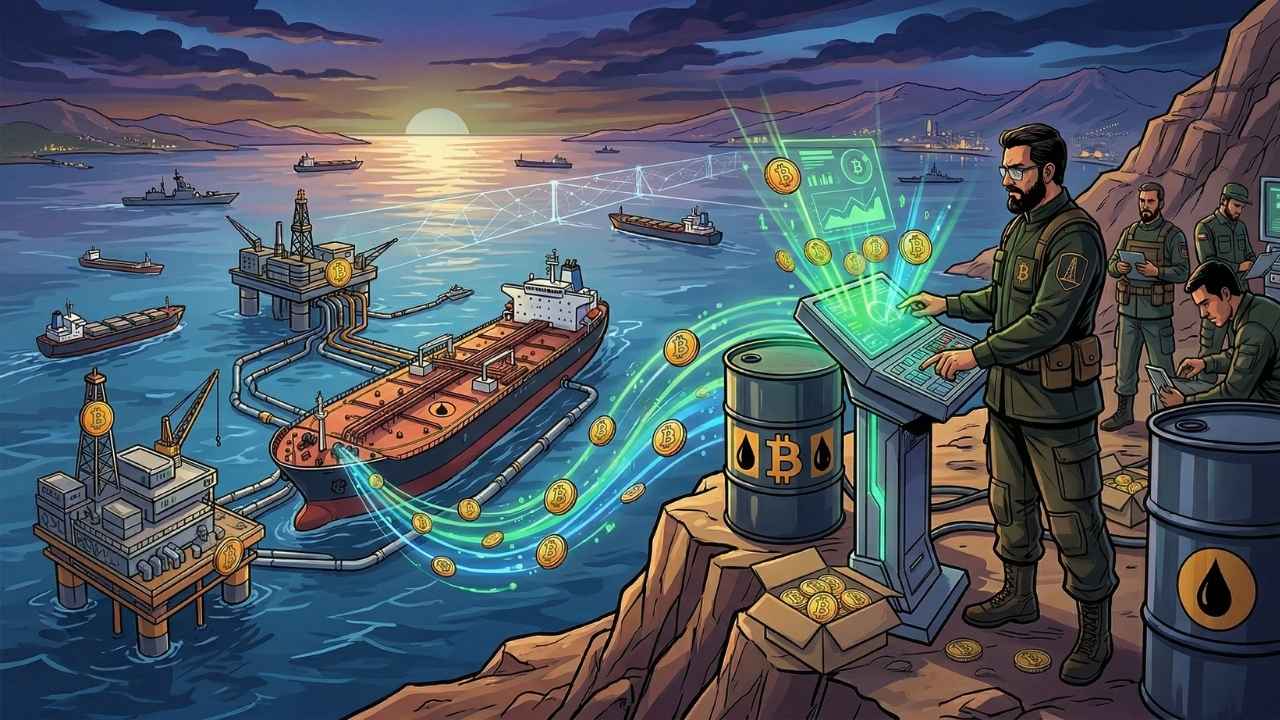
According to a report published by the Financial Times, Iranian authorities are evaluating the implementation of a 1 dollar tariff in Bitcoin per barrel of crude. This measure in the Strait of Hormuz arises after the ceasefire with the United States, seeking to evade international economic sanctions through digital assets with high liquidity and immediate processing.
Hamid Hosseini, spokesperson for Iran’s Oil, Gas and Petrochemical Products Exporters’ Union, confirmed that empty tankers will operate without additional charges. However, those loaded with crude oil must settle their obligations in Bitcoin through a rapid response system via email. This mechanism seeks to ensure that payments are not traced or confiscated by Western financial authorities due to existing restrictions.
Digital oil redefines logistics in the Persian Gulf
The reactivation of trade flow in this critical maritime artery occurs at a time of extreme volatility for the global energy market. The price of crude exceeded 100 dollars per barrel for the first time in four years, while the crypto market shows instability. This state strategy leverages the transparency of the blockchain to ensure liquidity in a context of severe international banking isolation.
The structural impact of this decision transcends simple tax collection on the transport of raw materials on a global scale. By demanding payments in decentralized assets, Iran sets a challenging precedent for the Swift system and the hegemony of the US dollar. The speed of the process, estimated at just seconds after technical evaluation, demonstrates an operational sophistication that exceeds the controls of the Office of Foreign Assets Control.
Data from the analysis firm Elliptic revealed that the Iranian central bank had already accumulated 500 million in Tether previously. This trend aligns with recent reports that identified flows exceeding 3.7 billion dollars during the first half of the year 2025. The use of these assets is not an improvised reaction, but a consolidated state policy to mitigate isolation from the current international financial system.
Can Bitcoin neutralize the impact of sanctions in the strait?
Historically, the country has attempted various strategies to protect its economy, from bartering to intensive asset mining operations. However, the hash rate collapse experienced in previous periods has forced the government to seek alternatives in receiving direct payments. This new phase represents an evolution toward direct value capture at the most strategic transit point on the entire planet.
The correlation between oil prices and the adoption of digital assets in sanctioned regions suggests a significant paradigm shift. Global energy supply stability now depends partly on the technical capacity of shipping companies to operate with digital wallets. This phenomenon recalls the crises of 2020 and 2022, where the lack of traditional financial channels boosted solutions in economies facing high inflationary pressure.
Despite the high risk implicit in these transactions, the two-week ceasefire agreement offers a crucial operational window for trade. The success of this pilot experiment in the Strait of Hormuz will determine if Iran permanently integrates these fees into its legal framework. Financial markets must closely monitor the implementation of these protocols and the possible response of US regulators to this strategic maneuver.
Looking ahead, the validation of weapons and cargo during transit will remain a security priority for the local authorities. The development of this digital toll system marks a milestone in the convergence between energy geopolitics and global finance. Investors must remain attentive to the evolution of the Ten-point Plan presented by Iran to condition peace and stability in the region.

