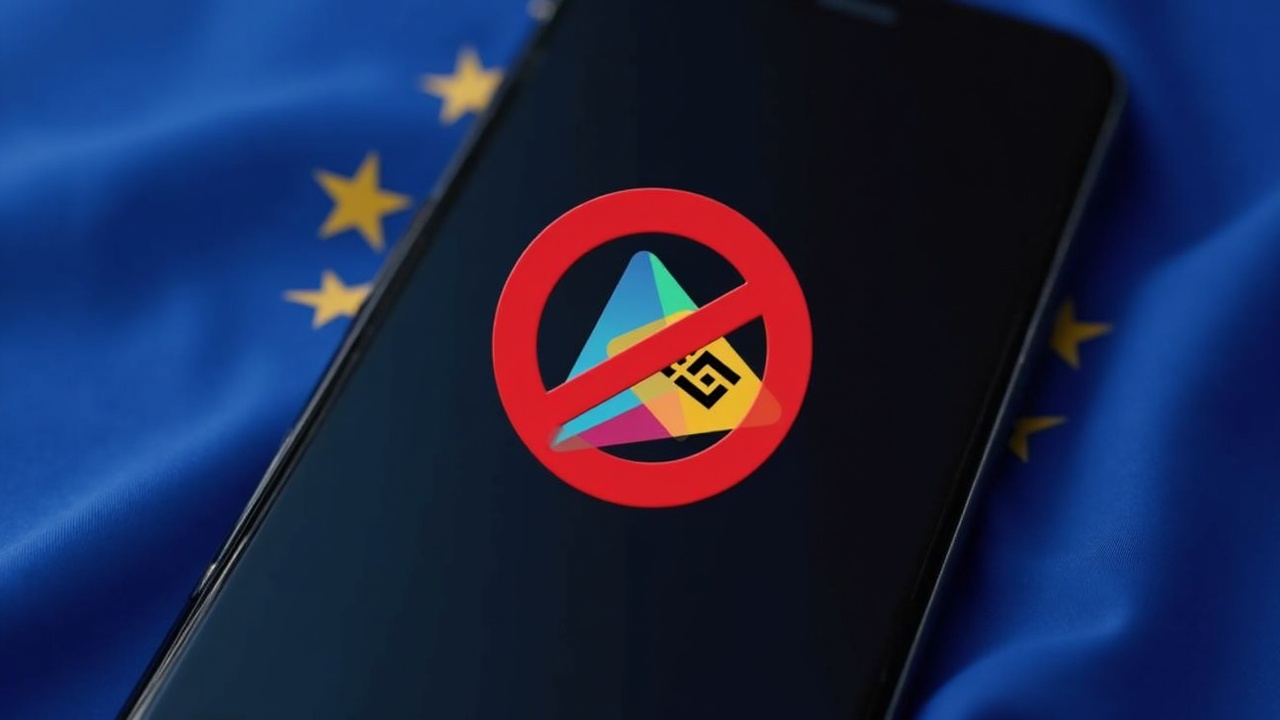
The Binance Android app is no longer available on Google Play in several European Union countries after the exchange failed to obtain a license under the Markets in Crypto-Assets (MiCA) regulation before the June 30, 2026, deadline. The measure, effective as of July 1, affects markets such as Spain, France, Italy, and Poland, and marks a new chapter in the practical implementation of European crypto-asset regulations.
The issue is not solely regulatory. It also highlights the role that major tech platforms are assuming in overseeing regulatory compliance. Without a valid MiCA authorization, Google Play blocked the app’s distribution in the affected jurisdictions, preventing new downloads by Android users.
The first active enforcement against an unregulated exchange in Europe has happened.
Binance's App has been removed from Google Play Store (Android).More unregulated exchanges will follow shortly.
Do not wait until you get locked out of your assets and move your funds to a…— Erald (@EraldOnChain) July 24, 2026
MiCA requires crypto-asset service providers to obtain a license in at least one Member State to operate throughout the European Union via the EU passport system. Binance withdrew its license application in Greece on June 24 and was unable to obtain an alternative authorization before the regulation took effect.
The consequences for users go beyond simply being unable to install the app. Those who have already downloaded it may stop receiving updates and security patches from Google Play, which increases the risks of compatibility issues and vulnerabilities over time.
In similar situations, Binance has recommended installing the app using an APK file downloaded from its website. However, cybersecurity experts warn that this method exposes users to a higher risk of malware, fake apps, and phishing campaigns, especially when the files come from unverified sources.
More Trouble for Binance in Europe
In addition to the app’s removal, Binance has suspended new registrations, deposits, and spot trading in the affected countries. Withdrawals, however, remain available in most cases, while the company encourages users to continue using its services.
Binance has reiterated its commitment to the European market and stated that it will apply for new MiCA licenses in other member states. France is among the potential jurisdictions for filing a new application. At the same time, the company has shifted part of its operations to entities registered with the Abu Dhabi Global Market—a strategy that is likely to draw scrutiny from European regulators to determine whether it complies with the spirit of MiCA or is simply seeking to operate from outside the bloc.
This episode draws a clear conclusion: MiCA compliance no longer merely determines which companies can offer crypto services in Europe. It also dictates their presence in major app stores, turning platforms like Google Play into an additional filter for accessing the European market.