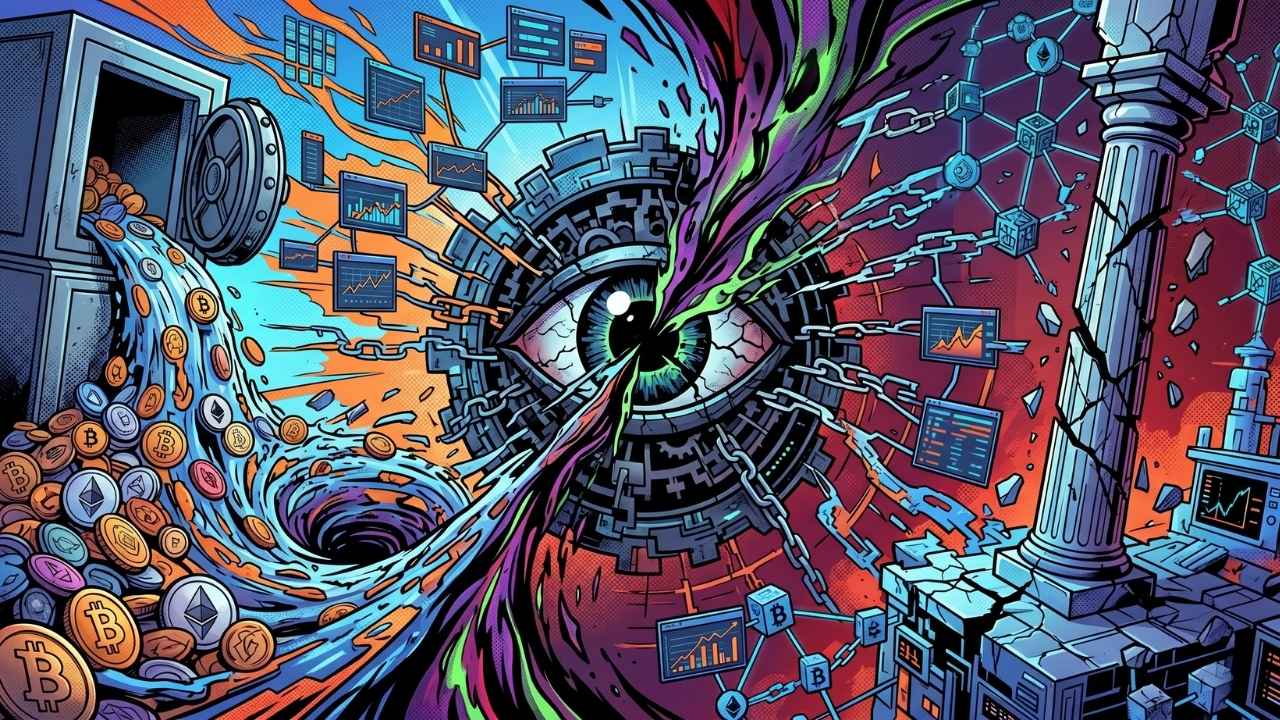
The oracle manipulation in decentralized prediction markets represents a persistent technical threat to the integrity of financial protocols. This thesis argues that dependence on external sources creates critical attack vectors that current resolution mechanisms fail to mitigate efficiently within the digital asset environment.
The growth of these platforms is undeniable, especially when observing that monthly transactional volume exceeded 1,000 million dollars during the third quarter of 2024. This capital flow economically incentivizes the execution of coordinated attacks against feeds that determine the final outcome of recorded bets.
The fidelity of data recorded on the blockchain network is the determining factor for the survival of these markets. However, oracle manipulation occurs through the deliberate distortion of information before validation, compromising the oracle security that sustains DeFi against external corruption attempts within the network.
Protocols using optimistic resolution mechanisms pose a scenario where veracity is initially presumed valid. This architecture delegates responsibility for surveillance to a community of active verifiers who can be overwhelmed by the speed of position liquidation in high-liquidity secondary markets.
Differential analysis reveals that the cost of corruption is lower than the potential profit obtained by financially powerful actors. If governance token capitalization is small, oracle manipulation becomes a profitable financial strategy for those seeking to control the consensus vote through the accumulation of power.
This economic asymmetry allows institutional attackers to distort results to secure profits on external derivative platforms. The technical design of many protocols prioritizes immediate availability, which increases the risk of incorrect executions that directly harm the end users of the digital asset ecosystem.
The technical fragility of on-chain resolution
The current oracle architecture separates smart contract logic from the source of physical information. This disconnection allows oracle manipulation to be executed outside the main network, exploiting the time latency between the event and its definitive record in the public and immutable history.
By closely examining decentralized data nodes, an urgent need to diversify consulted sources is observed. The lack of redundancy in critical information providers facilitates a single point of failure compromising the solvency of thousands of investors who rely on algorithmic precision.
Historically, projects like Augur faced severe trust crises during 2020 due to ambiguity in their resolutions. The structural difference today lies in the concentration of institutional capital demanding superior technical guarantees, transforming any data flow error into a systemic event for the decentralized financial sector.
In previous cycles, low liquidity limited the real impact of coordinated fraud attempts on platforms. Currently, the depth of order books allows hiding complex maneuvers of oracle manipulation under the guise of legitimate commercial activity, making detection by automated security systems extremely difficult.
Extreme decentralization advocates argue that reputational damage deters validators from acting maliciously. This discourse assumes that long-term economic incentives guarantee absolute honesty from participants, ignoring that state actors exist with objectives that transcend direct and immediate financial profit.
Regulatory perspective and future scenarios
The regulatory framework proposed in various jurisdictions highlights the importance of monitoring information integrity in real-time. The absence of independent audit mechanisms over oracles could generate state intervention limiting technical operations of these platforms in the most important global financial markets.
However, this regulatory perspective may be centralist by not understanding protocol nature. The partial validity of the efficient market argument resides in record transparency, although the fact that manipulation is detectable does not prevent the financial damage from being irreversible for affected investors.
If the volume of incorrectly resolved disputes exceeds ten percent of the total value locked, the system will collapse. This scenario would invalidate the utility of prediction markets as reliable sources of truth for strategic decision-making in the institutional environment of modern digital finance.
The oracle manipulation is not just a programming error, but a structural failure in game theory. For these networks to thrive, it is imperative to implement zero-knowledge proofs that validate data without depending on the subjective will of small groups with conflicting financial interests.
Platforms that fail to strengthen their technical infrastructure against these attacks will suffer a massive migration of capital. The survival of prediction markets depends on the accuracy of their information feeds, as without data fidelity, the protocol transforms into an unfair wealth transfer system.
This article is for informational purposes and does not constitute financial advice.