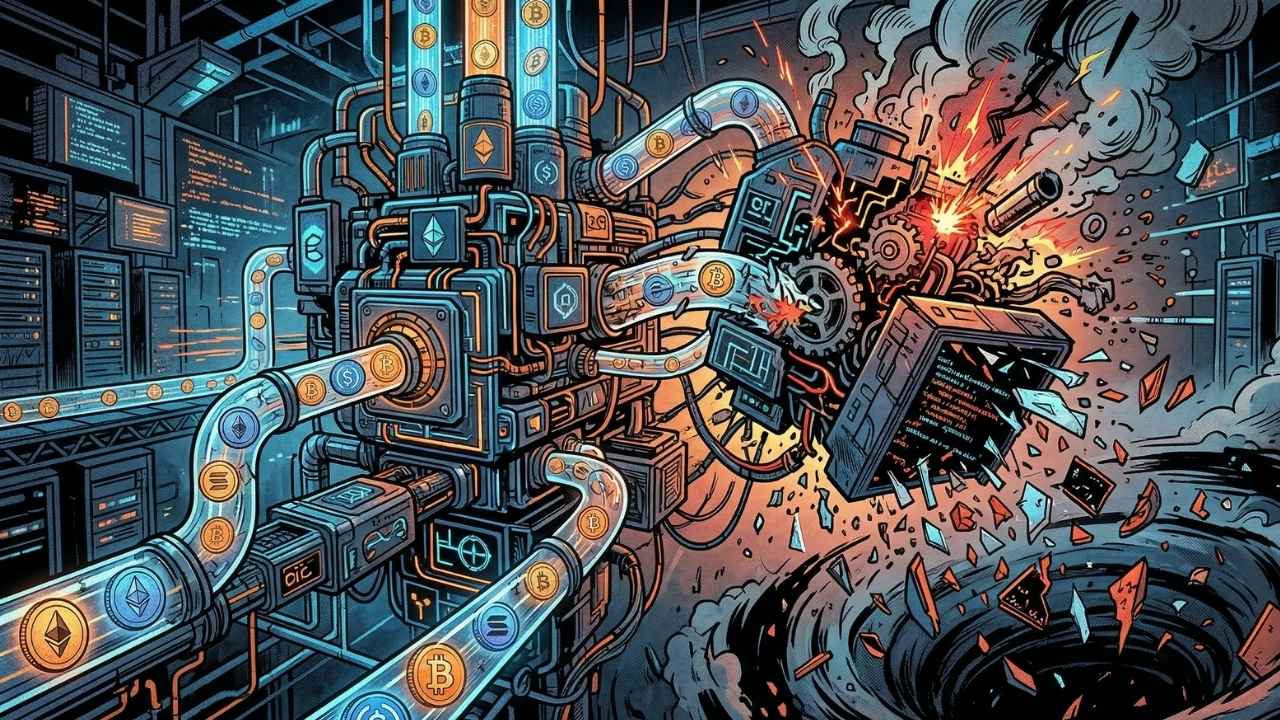
The transition toward a fully programmable financial ecosystem is reaching technical maturity through high-precision Automated DeFi. This process of change does not represent an aesthetic improvement, but rather a structural transformation of liquidity management in contemporary digital environments.
This phenomenon shifts manual decision-making toward autonomous execution algorithms that operate without interruption. Far from being a coincidence, this technical evolution responds to the search for maximum efficiency that human operators simply cannot achieve in the current context.
The Architecture of Financial Autonomy
The essence of this shift lies in the move from reactive transactions to proactive intentions. Automated DeFi allows users to define desired outcomes, letting the technical infrastructure find the most efficient route to settle those operations immediately.
Under this lens, technical complexity becomes invisible to the final investor. While in previous cycles interaction required deep knowledge, today systems manage self-executing capital flows that constantly optimize performance without manual errors.
This advancement is supported by solid technical pillars envisioned years ago. A fundamental example is found in the Ethereum whitepaper, which already proposed the creation of smart contracts capable of managing values without the intervention of trusted intermediaries.
Algorithmic Efficiency vs. Banking Inefficiency
In parallel, financial inventory management has ceased to be a passive task. New versions of leading protocols use hooks to enable Automated DeFi to adjust market positions according to external variables captured in real time.
This immediate responsiveness allows assets to migrate between protocols seeking the highest possible benefit. It is evident that we are witnessing the metamorphosis of DeFi, where the infrastructure stops being an experiment and becomes a global financial tool.
To understand this deployment, one only needs to look at the Uniswap v4 technical paper, which details how extreme customization and automation will redefine decentralized exchanges. Everything points toward human discretion being replaced by pre-established code logic and efficiency.
The Systemic Risk of Extreme Optimization
However, the elimination of the human factor introduces technical vulnerabilities that must not be ignored. While Automated DeFi reduces the risk of operational errors, it amplifies the danger of cascading failures when algorithms interact unexpectedly during liquidity crises.
Dependency on oracles and external data feeds creates critical failure points. In the current environment, any data anomaly can trigger a massive asset liquidation in seconds, surpassing the response capacity of traditional market regulators and supervisors.
This concern has been reflected in various recent institutional analyses. For instance, the statement on financial risks from the SEC highlights how the absence of direct human controls can exacerbate instability during periods of high crypto market volatility.
Lessons Learned from Previous Cycles
If we compare the current landscape with the 2020 cycle, the differences are striking. That period was characterized by manual management and rudimentary yield farming, while today’s Automated DeFi integrates advanced tools to predict price movements with mathematical precision.
In 2022, the collapse of various centralized models proved that algorithmic transparency is superior. Nevertheless, the current scene demands a more robust infrastructure that supports crypto wallets in DeFi capable of interacting with regulatory compliance systems automatically.
The implementation of these advanced functions depends on reliable infrastructure services. Chainlink Automation specifications show how the oracle network already allows the execution of smart contract functions based on time conditions or specific off-chain events.
Toward Governance Without Human Intervention
Certain sectors argue that excessive automation could lead to a new form of technical centralization. They claim that only actors with the greatest computing power and access to privileged data will dominate the Automated DeFi ecosystem, marginalizing the retail user.
While it is true that economies of scale favor large providers, the open-source nature of the code allows for constant auditing. The success of complex protocols proves that it is possible to maintain a balance between autonomous execution and global community oversight.
To dive deeper into algorithmic credit management, the Aave v3 technical paper details capital efficiency mechanisms. These systems allow Automated DeFi to manage risks granularly, adjusting loan parameters without the need for human credit committees.
That said, the validity of the thesis regarding total financial autonomy is conditioned on contract stability. If code errors persist above traditional banking industry standards over the next few years, mass adoption will be significantly slowed down.
Far from being a passing fad, automation represents the logical evolution of markets. If institutional capital flows persist above current levels for two years, Automated DeFi will consolidate as the standard of the global financial industry.
Only through the integration of autonomous agents and infallible code laws will true financial sovereignty be achieved on a global scale. The market no longer waits for humans; now algorithms dictate the pace of digital prosperity.