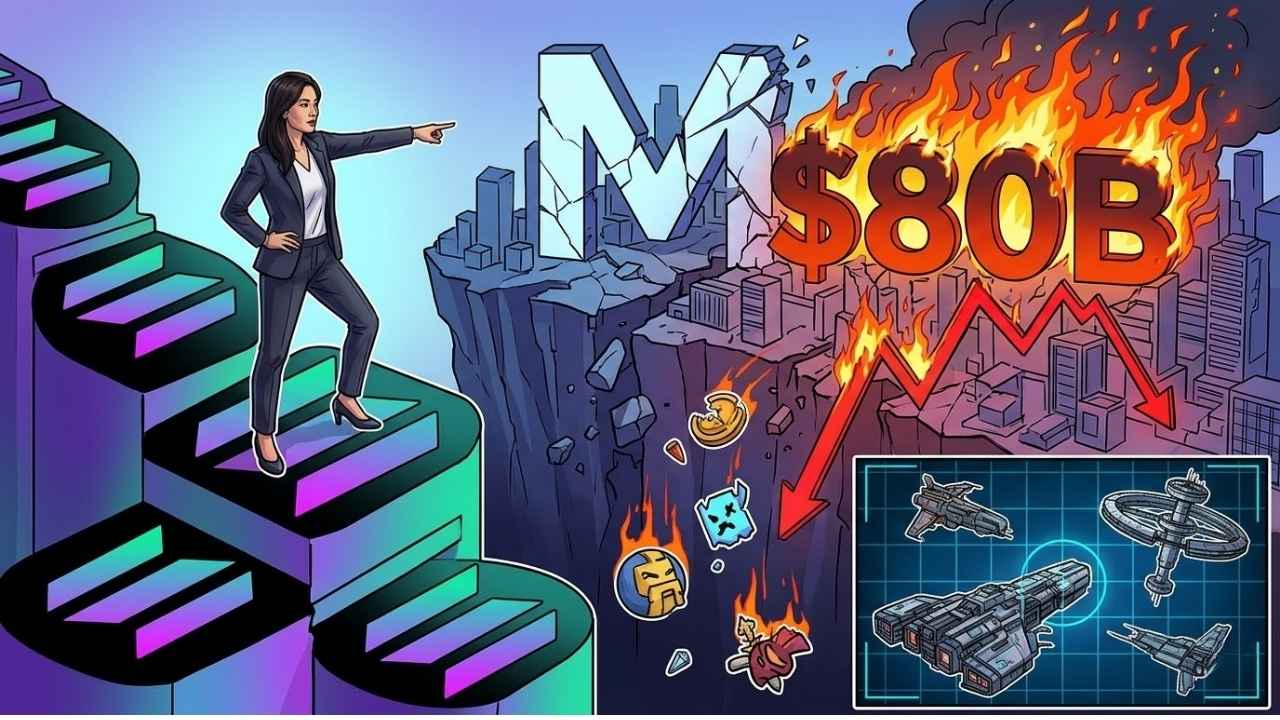
Lily Liu, President of the Solana Foundation, declared this Friday that the blockchain gaming sector is not coming back, according to data from Polymarket. Following the eighty billion dollar investment executed by Meta in a failed metaverse, the executive dismissed the viability of current models that promised to radically transform digital ownership across global networks on a permanent basis.
The Solana network was positioned as the preferred ecosystem to scale these experiences due to its high transactional speed. However, the systematic abandonment of ambitious projects like Star Atlas suggests an irreversible structural paradigm shift. The industry now faces a severe adjustment after years of excessive financial speculation in digital assets that strictly lacked any real-world utility or value.
Play-to-Earn model collapse redefines the strategy for Solana
Liu grounded her stance on social media, suggesting that current infrastructure has failed to retain genuine users beyond the initial monetary incentive. Despite the resilience shown by social applications such as Stepn, the lack of competitive gameplay has eroded institutional confidence. Therefore, venture capital is migrating toward sectors with higher technological traction and significantly less dependence on inflationary token schemes.
Analytically, we observe a direct correlation between the fall of GameFi tokens and the 2021 global liquidity cycle. While during that period fun was displaced by value extraction mechanics, today’s market demands high-fidelity finished products. It is evident that gaming web3 requires a deep restructuring to survive the contemporary user fatigue that rejects tedious and repetitive gameplay mechanics.
This disinterest is not an isolated phenomenon of decentralized networks, given that tech giants have failed quite miserably. The macroeconomic correlation between virtual reality spending and digital asset adoption proves that infrastructure was not the only problem. The market has validated that closed economies based on volatile tokens do not possess the necessary robustness to sustain massive gaming ecosystems.
Is a transition toward invisible infrastructure in video games possible?
Despite the bleak outlook, entities like Mythical Games are attempting to preserve the concept through the use of globally recognized brands. Although blockchain technology remains present, its visibility has been reduced to avoid alienating the traditional gamer. The use of stablecoins in games is emerging as an efficient alternative to manage internal transactions frictionlessly, moving away from the highly speculative assets that dominated the previous narrative.
Recent projects like “Off the Grid” demonstrate that the optional integration of digital assets might be the only viable path forward. However, Liu’s statement marks a regulatory and commercial milestone that forces developers to rethink their strategic horizons. Since investor interest has cooled down significantly, only those proposals featuring organic gameplay will manage to navigate this prolonged technological winter.
The immediate future will depend on the developers’ ability to hide technical complexity under layers of pure entertainment. Analysts must closely monitor the upcoming treasury reports of studios that still hold significant reserves in crypto assets. Only the convergence between invisible technology and fun will determine if this sector achieves a real reinvention or disappears for good.