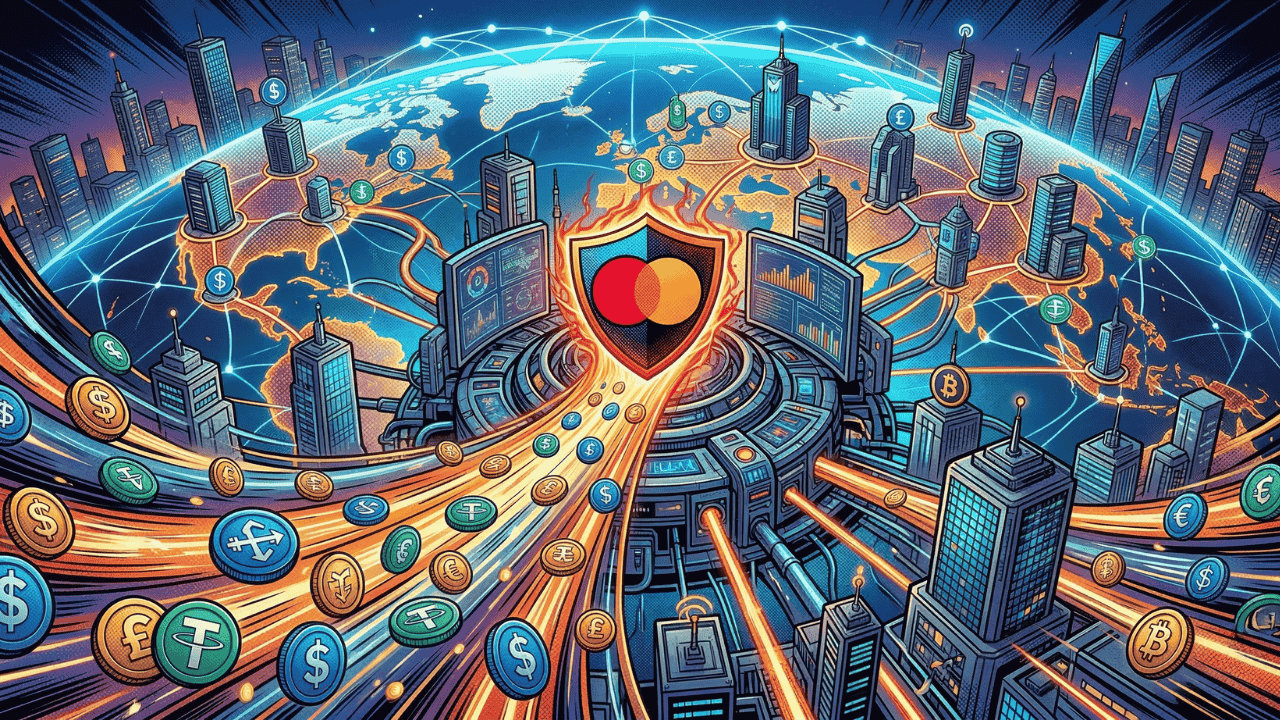
Mastercard officially launched its Crypto Partner Program, integrating 85 leading companies such as Binance and Ripple, according to the technical report issued March 11. This initiative seeks to standardize the connection between traditional financial rails and blockchain tools, consolidating an ecosystem that will process transactions in a stablecoin market reaching 312 billion dollars.
The financial corporation has designed a standardized integration framework that allows digital native firms to operate under unified global compliance regulations. This system transcends previous individual partnerships by establishing common technical standards for more than 200 countries. The architecture relies on three fundamental pillars that guarantee interoperability between fiat money and digital assets.
The definitive convergence between traditional finance and decentralized custody
The Multi-Token Network acts as the settlement backbone, managing tokenized bank deposits and transfers through stablecoins with institutional efficiency. The simplification of complex alphanumeric addresses through the Crypto Credential system drastically reduces operational errors for end users. This technical layer allows transactions to be readable, secure, and fully verifiable under modern digital identity criteria.
Direct integration with MetaMask represents a structural milestone by allowing spending from self-custodial wallets without the need to pre-load funds. This advancement preserves user sovereignty over assets while enabling immediate utility at physical points of sale. The elimination of intermediaries in the payment chain optimizes settlement speed, overcoming the limitations of legacy banking systems.
Historically, cross-border payments have relied on correspondent networks that introduce time frictions and high costs for each intermediary. The implementation of stablecoin payments through this unified network directly challenges SWIFT’s hegemony by settling operations in real-time. This evolution reflects an infrastructure consolidation similar to that seen in institutional adoption cycles recorded since 2020.
How will this infrastructure transform corporate capital flows on a global scale?
The ecosystem includes giants like Circle and PayPal, providing deep liquidity and dollar-denominated settlement assets such as USDC. The participation of Ripple and Paxos adds strategic payment corridors and experience in issuing regulated assets. Each participant functions as a piece of a financial gear that now operates synchronously under a single and regulatory compliance interface.
Corporate treasuries find in programmable money an efficient solution for supply management and payments to international workers. The ability to perform instant global settlements reduces immobilized capital and improves transparency in fund traceability. This technical paradigm shift is the basis for a more resilient financial system according to the latest tokenization reports issued by international banking organizations.
As we move through 2026, vigilance should focus on the implementation of SoFiUSD and the evolution of the CLARITY Act regulatory framework. The consolidation of these 85 financial entities under the Mastercard umbrella marks the beginning of a hybrid payments era. Success will depend on the technical adoption of these standards by traditional banking institutions according to the network’s own integration manuals.