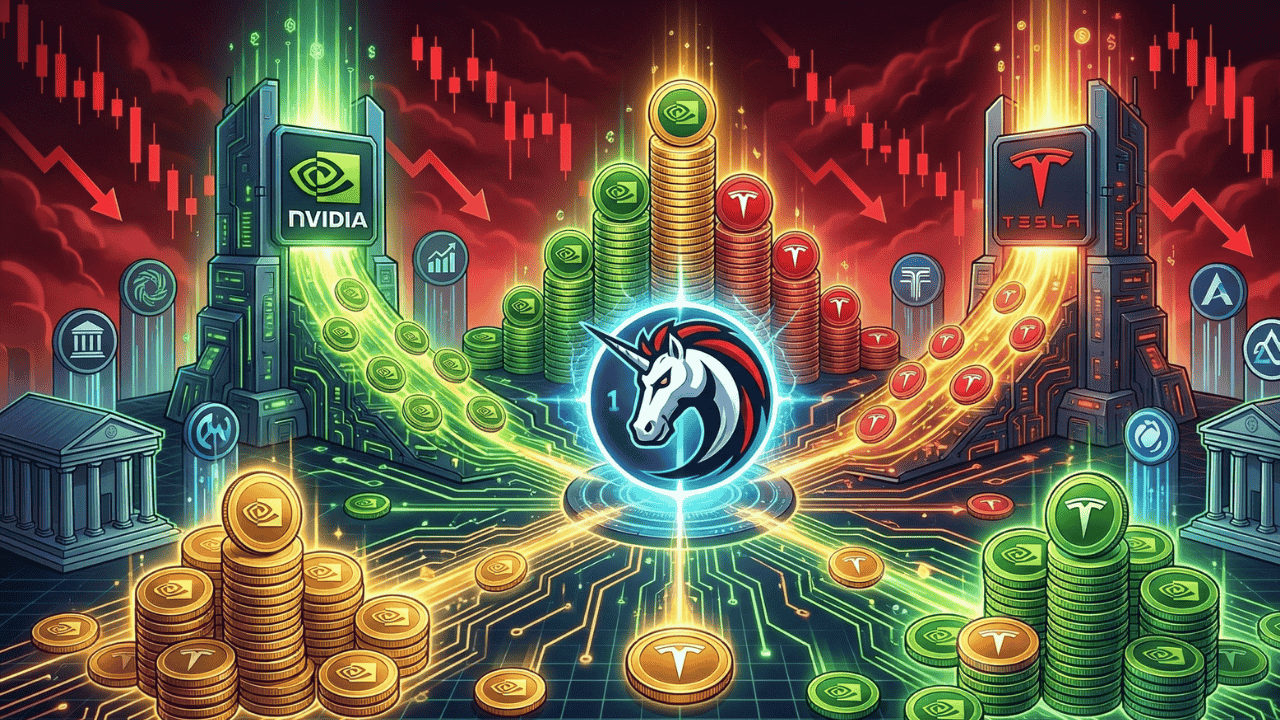
According to data published on Dune Analytics and shared with Cointelegraph, trading volumes in tokenized stocks and ETFs routed through 1inch’s integration with Ondo Finance topped 2.5 billion dollars. This milestone, reached since the partnership went live in September 2025, positions real-world assets as the most resilient growth engine in the sector today.
The BNB Chain network concentrates most of this activity, generating approximately 2 billion dollars through 1.3 million individual transactions. Mass retail adoption on scalable networks is allowing capital to flow into traditional assets with minimal friction. This phenomenon demonstrates that users seek refuge in regulated instruments when the volatility of native digital assets increases significantly during this period.
Appetite for traditional equity drives on-chain liquidity depth
An analysis of market behavior reveals that the average swap size is around 1,400 dollars, reflecting capital deployment with professional intent. According to the latest market data report, assets like Nvidia (354 million) and Tesla (332 million) lead investor preferences. The tokenization of US blue-chip stocks allows global investors to access top-tier equity markets without the traditional geographic barriers or brokerage limitations.
The 200% annual growth in the Total Value Locked (TVL) of RWAs on Ethereum, now nearing 15 billion dollars, marks a structural difference from the 2024 cycle. While the global crypto market shed nearly 1 trillion dollars in valuation recently, real-world asset markets climbed 13.5%. Financial infrastructure is moving on-chain to take advantage of instant settlement and the transparency offered by auditable smart contracts in real-time.
Historically, contraction periods in the cryptocurrency market have forced a purge of speculative projects. In 2026, however, the maturation of products like BlackRock’s BUIDL fund has injected unprecedented institutional legitimacy. Tokenized US Treasury bonds have increased their market cap by over 1 billion dollars this year, acting as the essential “risk-free collateral” for the broader DeFi ecosystem.
Can liquidity aggregators replace traditional stock market brokers in the future?
The value block lies in the transformation of aggregators into distribution rails for regulated issuers. 1inch operates in a non-custodial manner, allowing jurisdictional eligibility controls to remain with the token issuer. This hybrid regulatory compliance architecture suggests that tokenized assets will stop being a niche and become the everyday “financial plumbing” of global markets over the coming years.
With a cumulative volume defying the general bearish trend, the integration of traditional assets into decentralized protocols appears irreversible. According to RWA.xyz statistics, diversification into silver and other metals is also gaining traction, with 225 million dollars transacted. The convergence between traditional and decentralized finance is creating a hybrid market where liquidity depth is the determining factor for protocol survival.
Looking ahead, the market must closely monitor the alignment of technical standards and regulatory clarity across major economies. The success of 1inch and Ondo is merely the prelude to a massive migration of financial assets toward more efficient settlement rails. The stability of transactional volume growth will be the key metric to validate if tokenization can sustain itself as the primary value hedge during high macroeconomic uncertainty quarters.