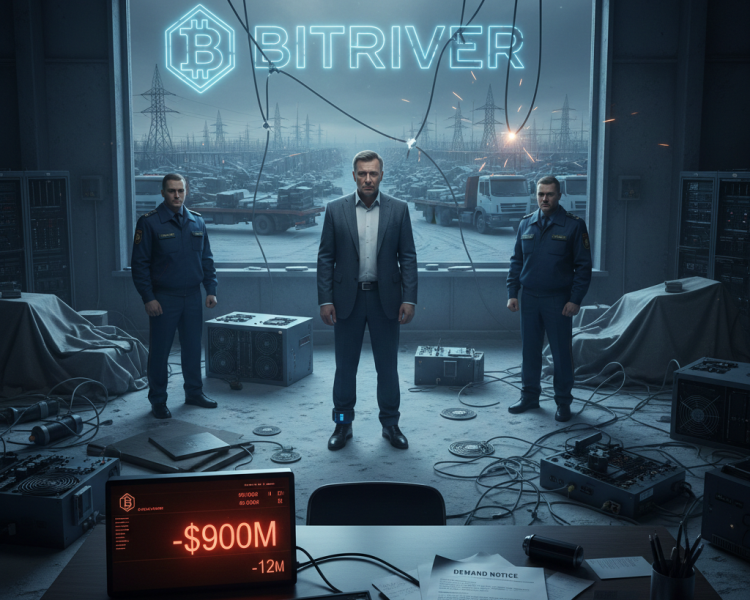
The Bitcoin mining giant, BitRiver, has entered a critical phase following a Russian court’s decision to place its parent company under official supervision. This Monday, it was confirmed that the BitRiver bankruptcy in Russia is moving forward while its founder and CEO, Igor Runets, remains under house arrest for alleged tax evasion.
The crisis for the company, which once controlled over 50% of the domestic mining market, was precipitated after the breach of an equipment supply contract. The lawsuit was filed by Infrastructure of Siberia, claiming more than 9.2 million dollars for advance payments on hardware that was never delivered to the mining facilities.
In addition to the supply litigation, the firm faces a series of lawsuits from Russian energy providers for unpaid electricity bills exceeding 12 million dollars. Consequently, the lack of liquidity has led to the closure of multiple data centers, culminating in the departure of 80% of its executives and the dismantling of key infrastructures during the last few months.
What future awaits industrial mining after the arrest of Igor Runets?
The arrest of Igor Runets on January 31, under charges of concealing funds for tax payments, adds a layer of uncertainty over the project’s continuity. Although BitRiver operated 15 data centers with a capacity of 533 MW, the BitRiver bankruptcy in Russia suggests a profound restructuring or the transfer of its assets to new owners.
Furthermore, the situation reflects the current challenges of blockchain in jurisdictions with high regulatory pressure and energy volatility. Thus, the market is watching whether the fall of this industrial leader will allow for the entry of new competitors or if it will mark a setback in the region’s crypto ambitions, affecting the global hash rate and the confidence of institutional investors in the mining sector.
Ultimately, BitRiver’s fate will depend on ongoing negotiations for the transfer of its remaining assets and the resolution of the criminal charges against Runets. Nevertheless, the decline of this financial colossus underscores that even the most profitable operations can succumb to a lack of transparency and the accumulation of operating liabilities in a hostile macroeconomic environment.