
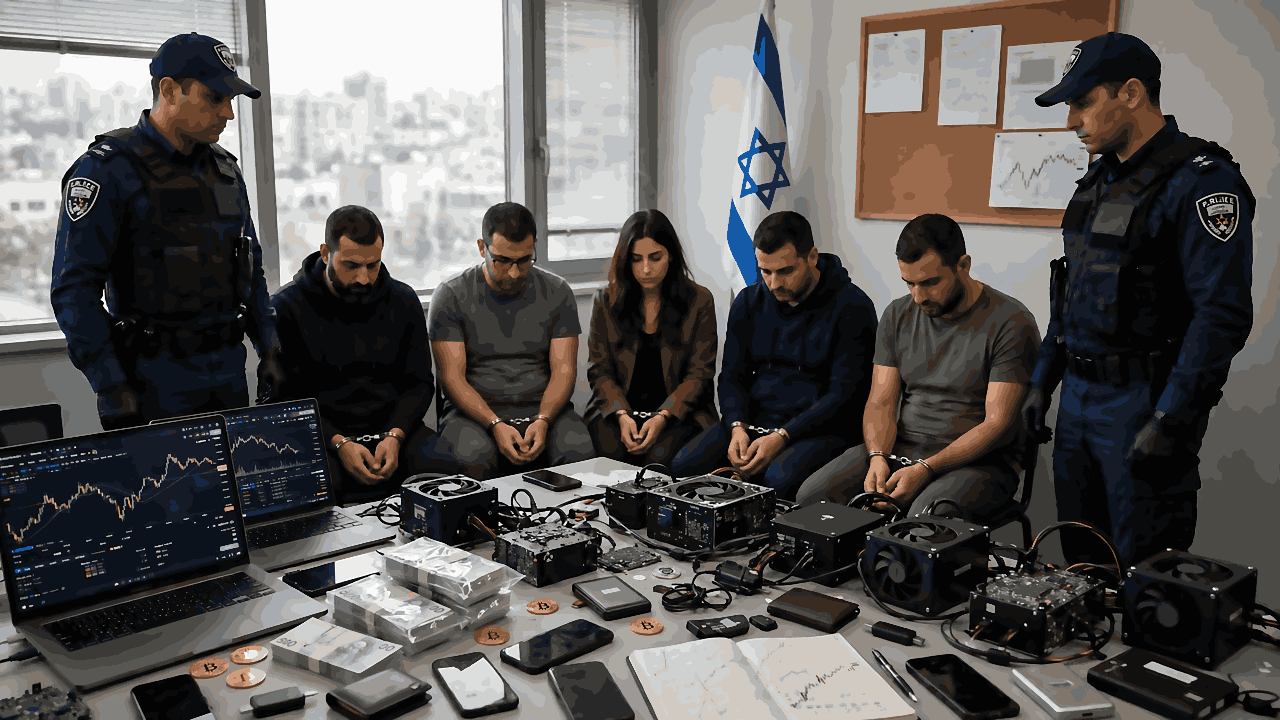
Israeli police arrested five individuals on November 10, 2026, in connection with a money laundering investigation involving roughly 16 million shekels, or $5 million in cryptocurrency transactions, arranged through a WhatsApp group.
Investigators from the National Unit for Combating Economic Crime within the Lahav 433 division suspect the group operated unlicensed virtual asset trading services and failed to report the financial activity to national tax authorities.
According to police findings, the suspects acted as partners holding distinct operational roles inside the messaging channel to facilitate exchanges worth hundreds of thousands of shekels while disguising the origin of the funds.
Investigators allege the network drafted fictitious loan agreements so that proceeds from digital asset sales transferred directly into conventional bank accounts would appear as legitimate credit disbursements.
During coordinated morning raids at the suspects’ residences on Tuesday, November 10, law enforcement officers seized cryptocurrency wallets, computers, and tens of thousands of shekels in cash.
The five individuals were questioned at Lahav 433 headquarters on suspicion of violating the Prohibition on Money Laundering Law, providing financial asset services without a permit, and obtaining funds by fraudulent means, with additional questioning expected as the probe expands.
Tax Enforcement Scrutiny on Digital Assets in Israel
The arrests follow heightened fiscal enforcement across the country’s digital asset sector. On October 6, 2026, the Israel Tax Authority reported two separate crypto tax arrests involving undisclosed trading operations worth tens of millions of dollars.
In one of those proceedings, investigators alleged that an Ashdod resident failed to report $13 million in income generated from cryptocurrency trades conducted between 2019 and 2021 using foreign accounts and third-party asset registrations.
Compliance gaps across the domestic market were previously highlighted by state auditors. A November 2024 report by Israel’s State Comptroller found that an average of 500 individuals reported crypto activity annually between 2018 and 2022, out of an estimated base of at least 200,000 potential filers.
The audit estimated uncollected tax revenue potential from digital currency income at between 2 billion and 3 billion shekels, urging authorities to clarify statutory reporting guidelines.
Beyond informal peer-to-peer networks, illicit capital flows remain a persistent focus across global markets, where Q3 2026 crypto hacks reached $1.18 billion across 107 documented security incidents.
To trace unauthorized transfers and off-ramp conversions into traditional banking rails, law enforcement units increasingly rely on blockchain analytics detailing how crypto investigators track stolen funds across public ledgers.
Lahav 433 investigators continue reviewing seized hardware and banking records to identify additional counterparties involved in the WhatsApp trading network.
This article is for informational purposes only and does not constitute financial advice.