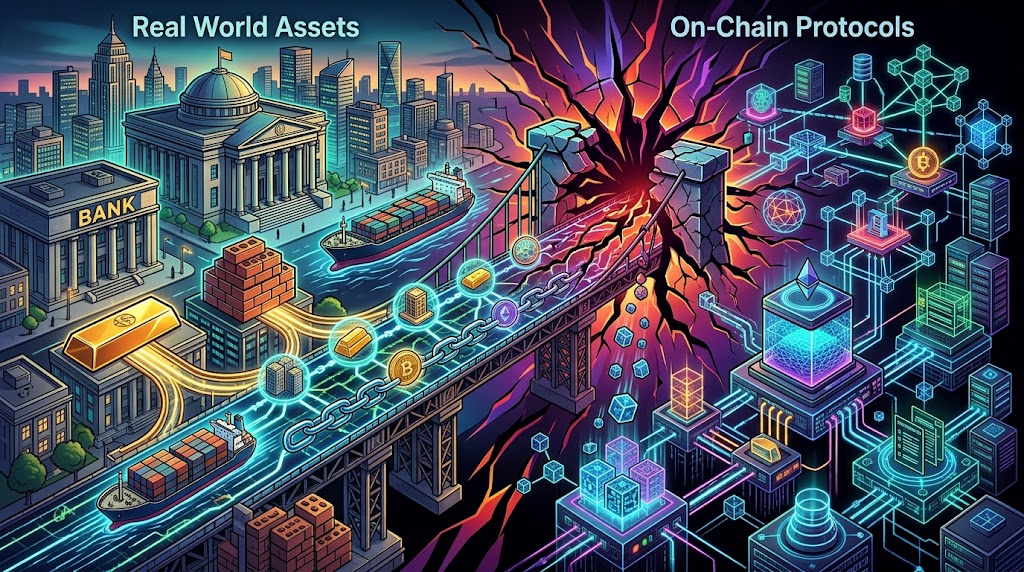
Decentralized infrastructure is incubating its largest systemic vulnerability by aggressively absorbing traditional financial instruments. A severe correction in global markets will directly impact on-chain protocols. The Federal Reserve published the FEDS Notes on tokenization warning about financial stability vulnerabilities through these new transmission channels.
The market mistakenly assumes that technology isolates capital from external shocks. However, centralized custody breaks this containment barrier completely. It is crucial to analyze why did tokenized RWA deposits triple while DeFi shrank to identify the origin of this systemic danger in digital finance.
Stablecoins and tokenized treasury bills now constitute the base layer of collateral in decentralized platforms. This bidirectional bridge guarantees that a liquidity shock in Wall Street will rapidly drain the funds from decentralized liquidity pools without any human intervention.
The launch of institutional funds accelerates this deep financial integration. The official press release for the BlackRock BUIDL fund validates the migration of traditional assets to public networks. This architecture exposes on-chain investors to previously non-existent counterparty risks.
During the summer of 2020, the cryptographic ecosystem functioned as a self-referential economy. Today, we connect algorithmic leverage directly with traditional assets. This resemblance to mortgage securitization of 2008 is undeniable when rigorously evaluating the growing risks of cross-market contagion.
Evaluating the real size of this exposure is fundamental to foreseeing the next downturn. Many debate whether the 8B tokenized treasuries market a true beginning or a premature institutional ceiling, but the real problem lies in the speed of automated liquidations.
The Systemic Contagion Channel
When traditional bond yields experience sudden spikes, tokenized representations suffer temporary pricing disparities. Market arbitrageurs react by extracting on-chain liquidity to cover their corporate positions. This action immediately destabilizes decentralized interest rates across all lending platforms without warning.
The policy document on decentralized finance published by IOSCO clearly states that connections with traditional financial markets amplify systemic impacts. A sudden freeze on fiat withdrawals would leave digital tokens as empty representations lacking any tangible backing.
Defenders of this integration argue that on-chain transparency mitigates any impending crisis. They maintain that real-time auditing of reserves allows market participants to anticipate solvency problems long before a widespread failure can occur within the broader digital ecosystem.
This counterpoint is valid when considering the historical failures of shadow banking. The immutability of the blockchain effectively prevents hidden rehypothecation. However, visibility does not prevent liquidations when external market makers face sudden margin calls from traditional brokers.
The transparency of smart contracts lacks utility if the underlying assets are locked in an insolvent bank. Algorithmic coding executes massive sales without considering market panic. The financial contagion travels in milliseconds toward other decentralized lending platforms automatically.
The Bank for International Settlements published an extensive report on cryptographic risks demonstrating that decentralization is often illusory. The structural dependence on centralized entities to maintain parity nullifies the theoretical benefits of autonomous protocols completely.
An abrupt fall in traditional stock markets would force institutions to aggressively liquidate their positions in digital assets. This simultaneous selling pressure would deplete automated liquidity pools entirely. Retail borrowers would suffer automated cascading liquidations across the board.
Proven Structural Vulnerability
The Treasury report on stablecoins exposes this alarming systemic dependence. Over fifty percent of the locked value depends directly on traditional banking infrastructure. Any fiat interruption will freeze decentralized operations instantly, removing operational efficiency completely from the market.
The correlation between stock indices and digital asset markets reaches historical highs during periods of monetary restriction. Recent macroeconomic data demonstrate that institutional investors treat both environments as a single shared risk portfolio, eliminating any true diversification benefits.
During the massive sell-offs of March 2020, traditional and digital assets dropped simultaneously due to the global dash for cash. Today, the operational transmission channels are significantly deeper, ensuring that a similar scenario causes severe structural damage globally.
Systemic risk is no longer limited to isolated vulnerabilities in smart contract code. The main threat now resides in commercial courts where traditional fiduciary companies could face lengthy bankruptcy proceedings, effectively freezing the protocol tokens indefinitely and causing widespread panic.
If risk-free interest rates drop sharply across the globe, capital will flee tokenized instruments toward purely native alternatives. This sudden asset rotation would cause a secondary liquidity crisis in decentralized lending platforms that depend heavily on these traditional yields for survival.
To completely invalidate this cross-vulnerability thesis, decentralized protocols would need to develop robust liquidity isolation mechanisms. As long as collateral depends on traditional fiat custodians, the financial sovereignty promoted by the industry will remain a marketing narrative without technical foundation.
If a top-tier traditional custodian suffers severe liquidity stress during the next twelve months, major protocols utilizing its assets will experience unstoppable algorithmic liquidations within hours. The direct financial connection would create an environment primed for immediate value destruction.
This article is for informational purposes only and does not constitute financial advice.